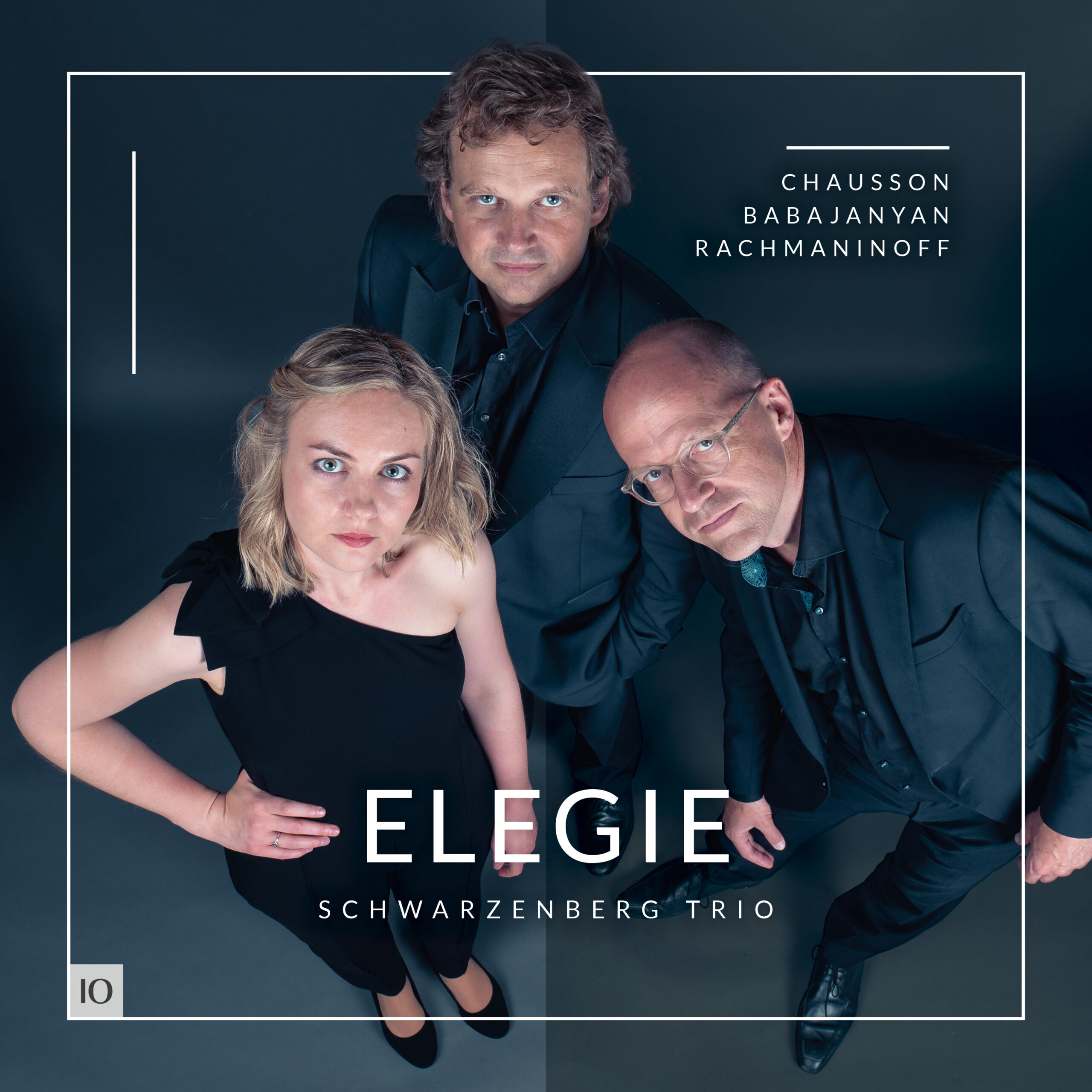
CD review by Fritz Jurmann in the magazine ‘Kultur und Gesellschaft’
The young piano trio presenting itself here with its latest CD consists, to two thirds, of musicians with connections to Vorarlberg. Its name, however, does not—as one might assume—derive from the culturally rich municipality of Schwarzenberg in the Bregenzerwald region, but rather from the musicians’ first meeting in 2021 at the café on Vienna’s Schwarzenbergplatz. The ensemble’s line-up has remained unchanged ever since: violinist Franz-Markus Siegert, cellist Roland Lindenthal, and pianist Hanna Bachmann.
Of the three, the musician from Röthis is perhaps the best known in Vorarlberg, thanks to her intensive career as a solo concert pianist and Lied accompanist. Having studied with Ferenc Bognár and received a scholarship from the Richard Wagner Association, she has also developed an international career at major musical centres, performing in the United States, Canada, Mexico, and Israel, and has released several solo recordings. Violinist Franz-Markus Siegert, originally from Dresden, has been second concertmaster of the ORF Vienna Radio Symphony Orchestra since 2009. Cellist Roland Lindenthal, born in Vienna and raised in Wolfurt, has performed as a soloist in many countries and has been principal cellist of the Vienna Volksoper since 2000. Vienna has always been the intellectual centre of the Schwarzenberg Trio, which from the outset has also maintained its own concert series at the Haus der Ingenieure in Vienna. The ensemble also appears at festivals in Austria, Germany, and other countries.
The title Elegie of their new album, featuring works from the late nineteenth century and the middle of the twentieth century, demonstrates a willingness to embrace stillness. Above all, it refers to the sombre atmosphere of Rachmaninoff’s famous one-movement, almost orchestral Trio élégiaque, which becomes the highlight of this recording. Yet the two other trios, by the French composer Ernest Chausson and the Armenian composer Arno Babajanian, are also characterised by restraint and are written entirely in minor keys.
The musicians succeed in avoiding the danger of excessive sentimentality through their youthful freshness, energetic approach, beautifully balanced ensemble sound, and impressive technical assurance. In doing so, they lend their programme a dynamic and compelling character.